
A Naturalist’s Dream from January to April
The remote Galápagos Islands, straddling the equator in the Pacific Ocean, are a living laboratory of evolution and biodiversity. Whilst there is plenty to see all year-round, the warm season—beginning in January and stretching through April—ushers in a spectacular array of natural events that captivate scientists, nature lovers, and adventurers alike.
During these months, the islands transform under the influence of tropical rains, rising temperatures, and the rhythms of reproduction and migration. From nesting birds to vividly coloured iguanas, and from sea turtles laying eggs to the arrival of the majestic, waved albatross, the warm season is a time of vibrant life and dramatic change.
Let’s take a journey through this season month by month, exploring the marvels that make the Galápagos truly unique.
January: The Revival of Life
January marks the beginning of the rainy season in the Galápagos, a time when the islands begin to bloom with life. Though the term “rainy season” might suggest constant downpours, the reality is more nuanced. Tropical showers are sporadic, often followed by intense sunshine, creating a humid and warm environment that triggers a cascade of biological activity.
The Nesting Season Begins
One of the first signs of the season’s shift is the behaviour of land birds. With the first rains, species such as Darwin’s finches and Galápagos mockingbirds begin their nesting cycles. The moisture brings new vegetation and insect life, providing the food necessary to support their young. Birdsong fills the air as males display and defend territories, and nests begin to appear in shrubs and trees across the islands.
Iguanas in Technicolor
On Española Island (also known as Hood Island), adult marine iguanas undergo a stunning transformation. Males become brightly coloured—flushed with red, green, and black hues—as they prepare for mating. This dramatic change is not just for show; it plays a crucial role in attracting females during the breeding season. These “Christmas iguanas,” as they’re affectionately called, are among the most visually striking reptiles in the archipelago.

Sea Turtles Come Ashore
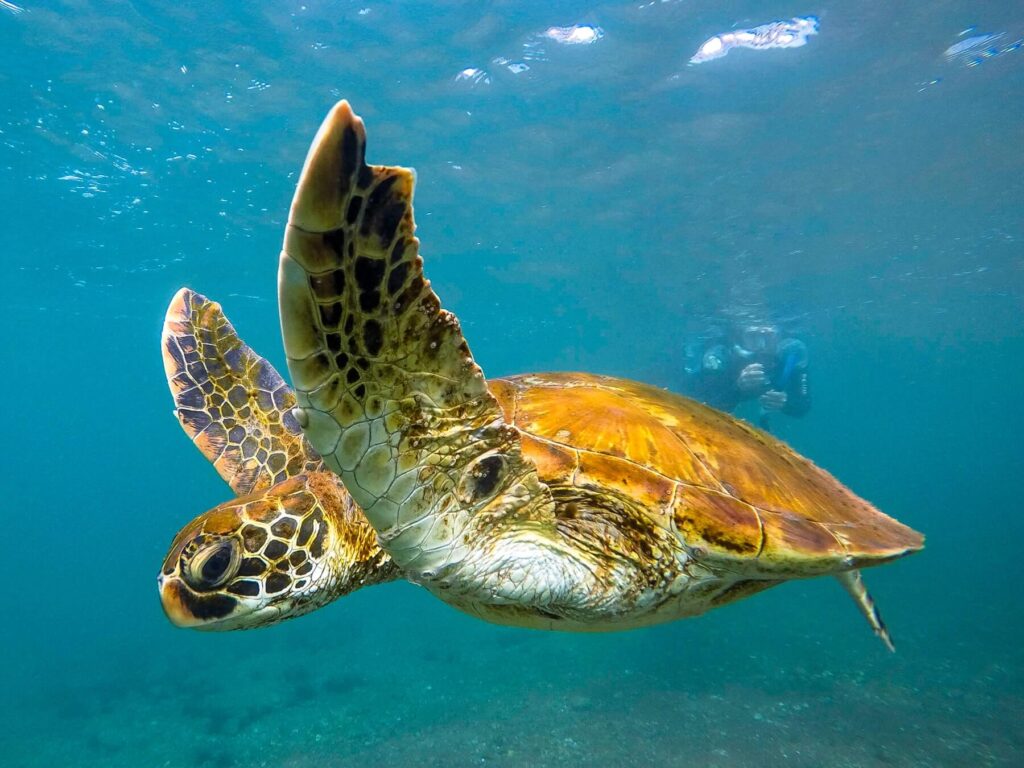
January also heralds the arrival of green sea turtles to the beaches of the Galápagos. These ancient mariners return to the islands to lay their eggs in the warm sand. Under the cover of night, females haul themselves ashore, dig nests with their flippers, and deposit dozens of eggs before retreating to the sea. The nesting process is a delicate and vulnerable time, and conservation efforts are crucial to protect these endangered creatures.
Land Iguanas Begin Their Cycle
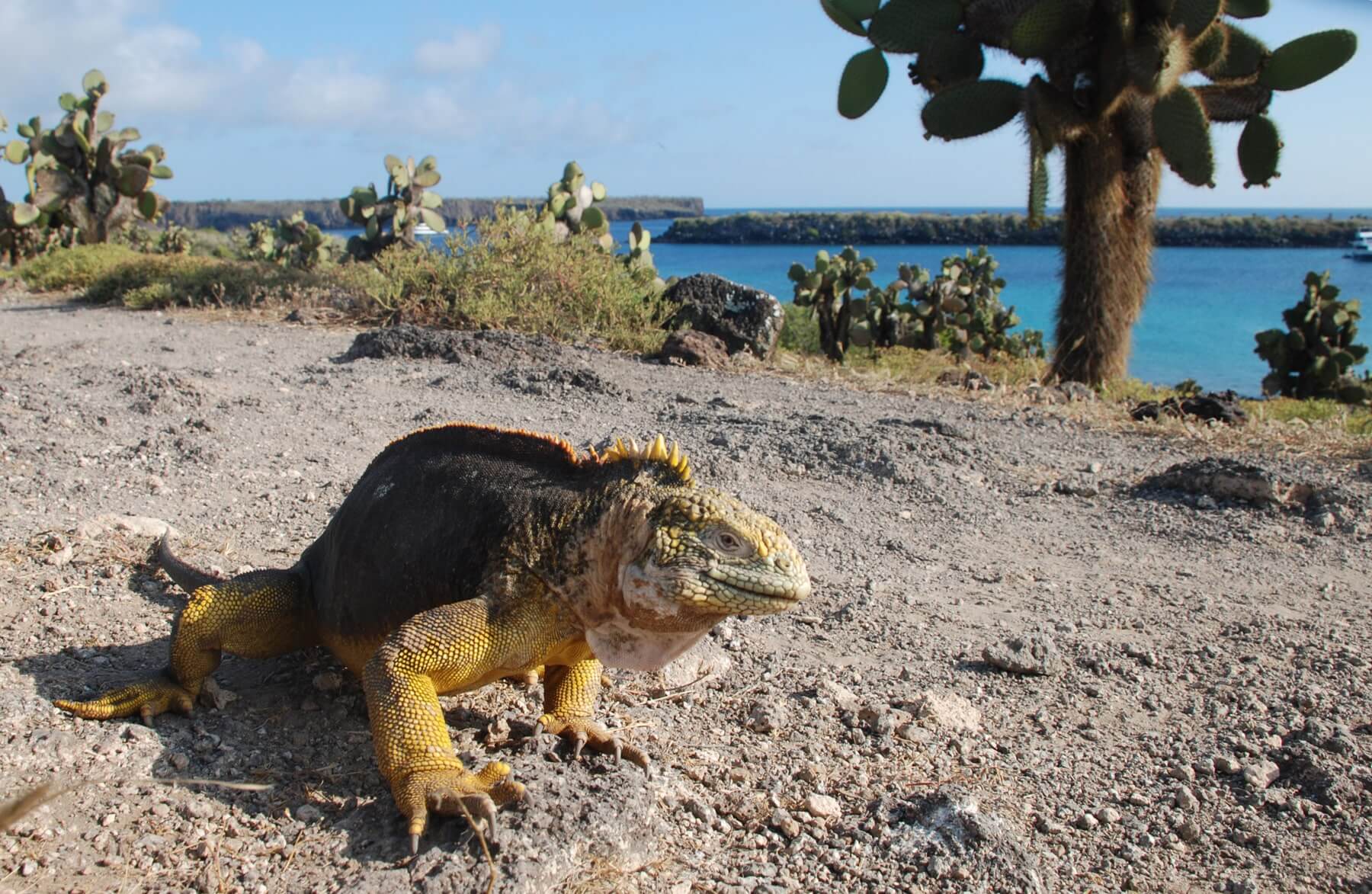
On Isabela Island, land iguanas begin their reproductive cycle. These plump reptiles, with their yellowish scales and dragon-like appearance, engage in territorial displays and mating rituals. The males become more aggressive, and competition for mates intensifies. The reproductive success of these iguanas is closely tied to the seasonal availability of food and water, making January a critical time in their life cycle. They are rather partial to prickly pear fruit.
Snorkelling Paradise
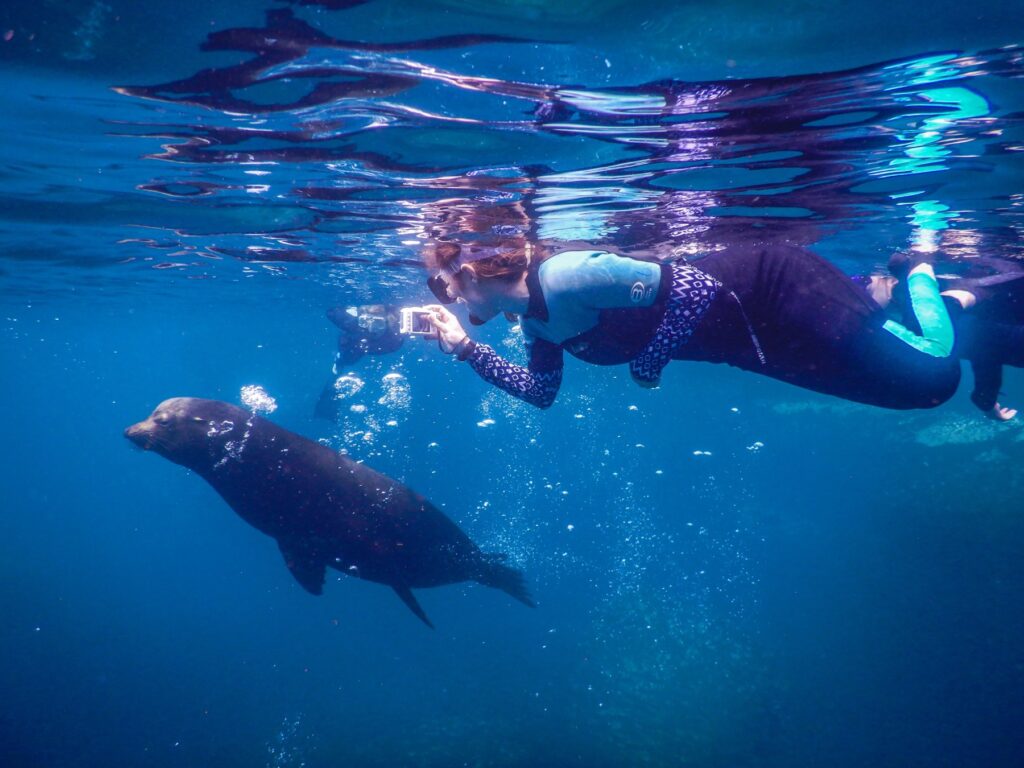
With both air and water temperatures rising—often reaching comfortable highs of 25°C (77°F)—January is an ideal time for snorkelling. The warm waters are teeming with life, offering encounters with sea lions, rays, reef sharks, and a kaleidoscope of tropical fish. Visibility is excellent, and the calm seas make for safe and enjoyable underwater exploration. The sharks present no danger due to the abundance of tastier food than humans.
February: Courtship and Colour
February continues the warm season’s momentum, with temperatures remaining high and wildlife activity intensifying. The islands are alive with courtship, nesting, and the vibrant interplay of species adapting to the changing climate.
Flamingos and Pintails Begin to Nest
On Floreana Island, greater flamingos begin their nesting season. These elegant birds, with their vivid pink plumage, gather in shallow lagoons to build mud nests and lay eggs. Their synchronized movements and communal nesting behaviour are a spectacle to behold.

Meanwhile, white-cheeked pintail ducks start their breeding season. These ducks are less conspicuous than flamingos but equally important to the island’s ecosystem.
Nazca Boobies Wrap Up Nesting
On Española Island, Nazca boobies are nearing the end of their nesting season. These striking seabirds, with their stark white feathers and black masks, have spent the previous months raising chicks. By February, many of the young are fledging, learning to fly and forage on their own. The cycle of life continues as adults prepare for their next breeding season.
Marine Iguanas Nest on Santa Cruz
Santa Cruz Island becomes a hotspot for marine iguana nesting in February. Females dig burrows in the sand and lay eggs, which will incubate for several weeks. The nesting process is energy-intensive, and females often fast during this period. The survival of the next generation depends on the stability of the nesting sites and the absence of predators. In some places feral dogs and cats have been a problem.
Penguins Retreat to Cooler Waters
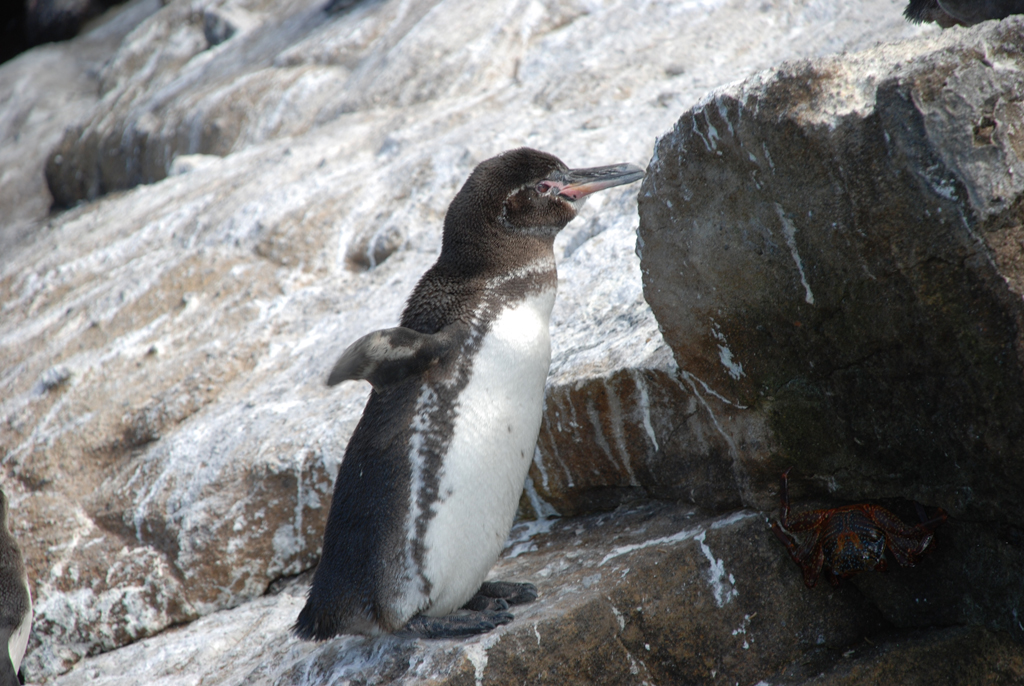
February also sees a decline in penguin sightings at Bartolomé Island. The Galápagos penguin, one of the few species to live near the equator, follow the cool waters westward or toward areas of upwelling. Their absence is a reminder of the delicate balance between ocean currents and wildlife distribution in the archipelago.
Galápagos Doves in Full Nesting Mode
The Galápagos dove reaches the peak of its nesting season in February. These ground-nesting birds exhibit a beautiful plumage. Their nests are often hidden among rocks and vegetation, and their chicks grow rapidly in the warm, food-rich environment.
March: The Height of the Warm Season
March is the climax of the warm season in the Galápagos. The rains are at their most intense, the sun is scorching, and the islands are buzzing with life. It’s a time of abundance, transformation, and dramatic natural events.
Tropical Rains and High Humidity
Though it doesn’t rain every day, March sees the highest precipitation levels of the season. Tropical showers can be sudden and intense, followed by blazing sunshine. Air temperatures can soar to 30°C (86°F), and humidity levels are high. This climate fuels the growth of vegetation and supports the reproductive cycles of many species.

Marine Iguanas Nest on Fernandina
Fernandina Island becomes a key nesting site for marine iguanas in March. The terrain provides ideal conditions for burrow digging. Watching these prehistoric-looking creatures engage in their nesting rituals is a highlight for many visitors.
The Arrival of the Waved Albatross
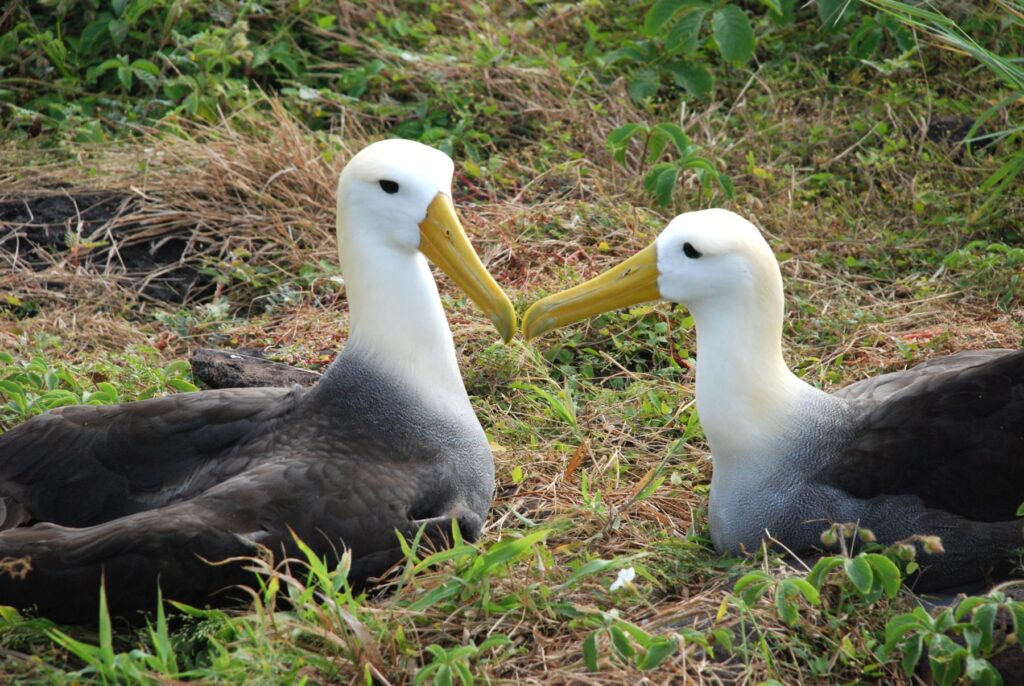
One of the most anticipated events of the season is the arrival of the waved albatross to Española Island around the time of the summer equinox (March 21st). These magnificent birds, with their massive wingspans and graceful flight, return to the island to begin their elaborate courtship dances. The albatross is a symbol of endurance and fidelity, and their presence marks the beginning of a new breeding cycle. Before they return to land, they can be seen ‘rafting’ offshore in groups.
Snorkelling in the West
Even the western islands, typically cooler due to ocean currents, experience warm waters in March. Punta Vicente Roca on Isabela Island offers exceptional snorkelling opportunities. Here, visitors can witness the surreal sight of Galápagos penguins swimming alongside tropical fish—a rare and delightful juxtaposition of cold-water and warm-water species. One of the most bizarre is the Mola mola or Sunfish, which looks like a huge head with no body.

Surge from Northern Currents
Some northern-facing shores experience deep surge (ola de fondo) from northern currents. This can make wet landings at sites like Puerto Egas, Gardner Bay, and Bartolomé more challenging. Visitors should be prepared for rougher conditions, but the rewards—such as pristine beaches and rich marine life—are well worth the effort.
Long Snorkelling Sessions
With water temperatures still warm and visibility excellent, snorkellers often spend extended periods in the water. The abundance of marine life, from playful sea lions to graceful rays, makes every dive an unforgettable experience.
April: Transition and Transformation
As April unfolds, the Galápagos Islands begin a subtle shift from the peak of the warm season toward cooler currents and changing wildlife patterns. Though the rains start to taper off, the islands remain lush and vibrant, offering a final flourish of activity before the dry season sets in. The humidity begins to ease, and temperatures remain warm, with air hovering around 28°C (82°F) and water temperatures still ideal for snorkelling. The landscape remains green and fertile, sustaining the last wave of seasonal reproduction.
Sea Turtle Hatchlings Emerge
On beaches across the archipelago, green sea turtle hatchlings begin to emerge from their sandy nests. Under the cover of night, these tiny creatures make their perilous dash to the ocean, guided by moonlight and instinct. Predation is high, but those that survive begin their long journey through the Pacific. Witnessing this moment is both heartwarming and humbling.
Land Iguana Hatchlings Appear
Isabela Island sees the emergence of land iguana hatchlings. These young reptiles, miniature versions of their robust parents, begin foraging and exploring their volcanic surroundings. Their survival depends on the availability of vegetation and the absence of invasive predators, making conservation efforts especially vital during this time.
Waved Albatross Courtship steps up
On Española Island, the waved albatrosses that arrived in March are now fully engaged in their elaborate courtship rituals. Pairs perform synchronized dances—clacking beaks, bowing, and circling one another in a display of lifelong bonding. These rituals are among the most iconic wildlife spectacles in the Galápagos.
Marine Iguana Hatchlings Begin to Emerge
From the sandy burrows of Santa Cruz and Fernandina, marine iguana hatchlings begin to surface. These young reptiles face immediate challenges, from predators to harsh terrain, but their emergence marks the successful completion of the nesting cycle that began months earlier. This is when the racer snakes ambush the new arrivals.
Snorkelling Remains Superb
April continues to offer excellent snorkelling conditions. With visibility still high and waters warm, encounters with sea lions, turtles, and tropical fish remain frequent. Sites like Devil’s Crown and Punta Vicente Roca are particularly rewarding, offering dramatic underwater landscapes and rich biodiversity.
Final Thoughts: A Season of Spectacle and Renewal
The warm season in the Galápagos Islands is a time of extraordinary natural events. From the vivid colours of marine iguanas to the nesting rituals of flamingos and albatrosses, every moment offers a glimpse into the intricate web of life that defines this unique ecosystem.
For travellers, photographers, and wildlife enthusiasts, January through April is an ideal window to explore the islands. The combination of warm weather, active wildlife, and excellent snorkelling conditions creates an immersive experience that is both educational and awe-inspiring.
Whether you’re hiking volcanic trails, watching sea turtles, nest under the stars, or floating above reefs teeming with life, the Galápagos in the warm season is a place where nature writes its own story – one of resilience, beauty, and wonder.
See our huge choice of Galapagos cruises or contact the experts
RELATED: A typical day in the Galapagos Islands
12 Practical Tips to Visiting the Galápagos Islands
Albatross Breeding Season in Galapagos
Like what you read in this blog? Talk to our travel expert to plan your dream trip to South America
Send message